Parrot Care
Caring for your parrot
A PARROT NEEDS ADEQUATE SLEEP
Some parrot owners often don’t quite understand how important sleep is to a bird. Vets and avian experts around the world give a clear cut message that parrots NEED at least 10-12 hours UNDISTURBED sleep a night, most experts say 12-14 hours .Parrots in the wild go to sleep at sunset and wake at dawn , and what people don’t realise is that sleep deprivation in parrots is very serious! Parrots can start terrible behaviour issues such as biting, feather plucking, self-mutation, screaming etc. But it can lower their immune system, cause cardiovascular disorders, depression and many other ailments.
People often have their birds in sitting rooms with the T.V blaring and watch programmes till early hours of the mornings. They then may wonder why their birds wake up grumpy, want to bite, has no desire to socialise with the family, has no intention of coming out the cage, pick fights with other birds and has a poor quality of life.
If a parrot lives in a family room that is very active till late at night, it is then best to buy the bird a separate travel cage , which can be used as a sleep cage and be placed in a spare room which is quiet to allow the bird to get the sleep to desperately needs.
ARE YOU ALLERGIC TO BIRDS?
African Greys, Cockatoos, Cockatiels and Amazons are powder down birds. This fine powder keeps their feathers soft, silky and waterproof. People with allergies, asthma, and other respiratory issues should consult with their doctor first before buying powder down birds. Often people have these medical issues but still chance it, sadly, the parrot ends up being re-homed, no fault of their own. It is not fair on the bird!
People with these medical conditions, should consult with your doctor first before buying ANY SPECIES of parrot.
BEAK TRIMMING
Never attempt to clip your bird's beak at home. A bad beak trim can cause permanent damage to your bird's beak, and a bird can bleed to death if done incorrectly. A parrot's beak is an extremely sensitive part of your bird's anatomy. This is because there is a series of pits in the upper and lower beak, these have many touch- sensitive cells. If the vein near the tip of the beak is cut, the parrots will bleed profusely, and it will be in terrible pain.
If a bird's beak is over grown, there is a reason why, and the bird needs to be examined by a vet ASAP. Illnesses such as liver disease can cause beaks to become over grown.
BLOW DRYING YOUR BIRD
People often make the mistake of drying their bird with a hair dryer. However, most hairdryers these days are fitted with a TEFLON coil, and of course Teflon fumes are toxic to birds. A bird's skin is also extremely sensitive! In doing so leaves the birds skin sore, sometimes burnt (even is on low heat) itchy and dry. Dry itchy skin can start a bird feather plucking! Blow drying also dries out feathers, leaving them Brittle and damaged!
A bird should be allowed to dry NATURALLY in a warm environment, which is free from any drafts.
CARING FOR BIRDS WHEN OUT IN THE SUN!
Taking your birds outside to enjoy a bit of sunshine is paramount for good health. No, they cannot benefit from sunlight through a window; they will not receive the vitamin D they need through glass.
When taking your birds into the sun, one side of the cage HAS TO be covered to give the bird a choice of shade. Birds can over heart and dehydrate extremely quickly when in direct sunlight. Drinking water has to be supplied at all times in the outdoor cage to prevent dehydration! Stainless steel bowls can become extremely hot and burn the bird in direct sunlight. The best choice would be to supply a glass or ceramic bowl, or make sure that the stainless steel bowl is on the side of the cage where you have given shade.
AUTHORS NOTE: I personally use cable ties to secure cage doors and cage windows while my birds are outside. Often cheap travel cages are used for the outdoors ; these can spilt apart very easily if accidentally dropped or banged. Therefore, cable ties are a good idea to use to tighten up the sides and bottom of the cage. Please remember even clipped birds can escape.
CHANGES THAT IMPROVE YOUR BIRDS HEALTH
Everyday changes in care can have a powerful effect on your bird’s overall health and wellbeing. Parrots are highly sensitive animals, and improvements in routine, environment, and observation often lead to better behaviour, stronger immunity, and a calmer, more settled bird. These changes don’t need to be dramatic or expensive, but they do need to be consistent. One of the most important changes is improving routine and predictability. Birds thrive when feeding times, sleep schedules, and daily interactions happen consistently. A stable routine reduces stress, supports digestion, and helps birds feel secure in their environment, even minor disruptions, such as late nights or irregular sleep, can affect mood and long-term health. Environmental changes also play a major role, better cage placement, balanced humidity, access to regular bathing, and reduced background noise all support respiratory health and emotional stability. Allowing uninterrupted sleep and avoiding constant stimulation helps prevent anxiety and behaviour problems from developing over time. Finally, closer observation makes a real difference; noticing changes in weight, droppings, appetite, or activity levels allows issues to be addressed early, often before illness becomes serious. When these changes are combined, they create a healthier, more supportive daily life for your bird and help them thrive long term.
ELDERLY PARROTS AND THEIR CARE
As we all know parrots live many years, and a lot of them can actually outlive their owner. So, it's always important to put in place arrangements for the parrots in the event of the owners death.
A parrot being happy is essential for a long life, a parrot being elderly does not mean they not then interested in new and exciting toys and games. Some people unfortunately, once the parrot reaches a certain age, neglects playing and buying new things for the cage, which is sad. New toys and games is fantastic to keep elderly parrots entertained, active and happy.
Lower perches- some parrots even when elderly still like to perch high up, so give the parrot a choice, lower the majority of the perches, but give an option of one or two still high up.
More layers of paper should be laid at the bottom of the cage, or a soft hand towel with paper on top of it. Elderly parrots sometimes don't have a good sense of balance, they can easily fall, so it's best they fall onto a softer surface.
Keep cages free from clutter- if an elderly parrot is having difficulty moving around, especially if they have arthritis, big toys and swings makes it even more difficult for them to move around. So, only put in the essential cage accessories, add some toys, but instead of adding a whole lot of toys, keep it at 2-3 and change toys around weekly.
If your parrot has arthritis, which symptoms may include: reduced flexibility, sitting at bottom of cage , swollen joints, loss of balance, difficulty climbing, biting at feet , reluctance to fly - flexible perches and sitting perches are a good idea, also wider wooden perches.
Please note: The above symptoms mentioned can come with arthritis, but can also mean many other illnesses. If you notice any of the above, please have your parrots vet checked ASAP.
Sleep is extremely important for elderly parrots, and they should be allowed to have 12-14 hours undisturbed sleep a night, along with as many naps as they like throughout the day.
Nutrition is very important to prolong your parrot’s life, so make sure you giving a good balanced diet. Calcium and vitamin A is very important for elderly parrots, so feed lots of leafy greens, boiled eggs etc. Many elderly parrots begin to enjoy mashed food too a bit more, and often like pellets soaked for a minute or so before eating.
Elderly parrots tend to lose weight too, so make sure you keeping a good weight record! They may find it difficult, especially with arthritis, to hold onto food bowls, so make sure they able to access food easily without having to hold onto the side of the dish. An idea is to put a perch alongside the food bowl, allowing them to perch on that instead of the dish.
Cataracts- elderly parrots sometimes develop cataracts, signs such as: squinting, redness and cloudy eyes. In humans this takes time to develop, parrots can develop it over a few weeks, so any of the above symptoms, or any other changes in eye condition, should be checked as soon as possible with a vet.
You may notice a few behaviour changes too with older parrots for example: increased sleep, less active, less vocal; again, this can be caused by old age, but can be signs of other illnesses, so any change in behaviour should be checked by your vet.
HOW REHOMING A BIRD CAN AFFECT ITS LIFE
Sadly, a parrot may be rehomed multiply times during its life. Some owners must make this hard decision due to their own poor health or unforeseen circumstances, and therefore it is in the bird’s best interest to be rehomed. However, in other cases, a selfish owner will rehome or sell their pet bird without a second thought and for insignificant reasons. They do not stop to think about how rehoming will affect the bird physically or psychologically.
One cannot compare giving a dog a new home to rehoming a bird. Dogs and cats are usually capable of re-establishing relationships with a new family very quickly if they are getting care and affection. Birds, on the other hand, are flock orientated and rely on their flock mates for security, they build very strong family units. A bird sees their human family as flock mates, therefore, when removed from the family find themselves in an extremely traumatic situation. It is emotionally traumatising for a bird to be rehomed. Many will start unhealth physical and psychological behaviours such as feather plucking, self-mutilation, phobic behaviour, screaming, biting, etc. Sadly, with each new home, they find it increasingly difficult to adjust to their environment, and to trust the new owner. Therefore, they live in a constant state of stress, anxiety, and depression. Many succumb to stress related illnesses.
How does the rehoming cycle start for many of these birds? It often begins with a novice owner failing to do any type of research regarding the parrot species they want to bring into their lives. Parrots are not for everyone, some species should only be cared for by experienced owners due to their size, behavioural traits, and the expense of their keep such as the Macaws and Cockatoos. Smaller species can be messy and often require as much attention as larger species. Due to their lack of expertise, the novice will re-home their bird to another novice bird owner or to a household which is not suitable, they too re-home the bird, and so the cycle continues.
HOW DO YOU KNOW IF REHOMING YOUR BIRD IS IN IT’S BEST INTEREST? ASK YOURSELF THE FOLLOWING QUESTIONS…
1. Is the bird suffering in your care?
2. Are you financially struggling to care for the bird correctly? (Medically, food, and accessories).
3. Can this situation be changed, worked on, or improve with time?
4. Have you found a home better equipped for your parrot species needs? A home that will vastly improve your bird’s quality of life. For an example, a lady told me the story about how she rescued a Macaw from an abusive home, however, as a novice bird owner she quickly realised a Macaw was a lot to handle and therefore was battling to care for him. She rehomed him to a Macaw sanctuary on a Spanish island where he was going to spend his days flying free among palm trees and was going to be trained by a professional which ran the sanctuary. In this situation, the Macaws life was vastly improved.
YOU HAVE OPTIONS OTHER THAN REHOMING YOUR BELOVED PET BIRD.
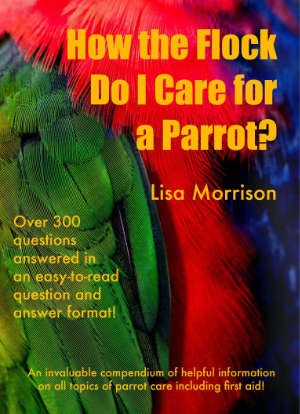
1. Many people find it difficult to deal with behavioural problems in parrots, however, these can be resolved with the correct help. There are many experienced, and professional bird owners and parrot behaviouralists which offer their services for free. There are of course books which teach specifically on parrot behaviour, such as “Breaking bad habits in parrots” written by author Greg Glendell. Additionally, books that teach you exactly how to care for your birds such as “How the flock do I care for a parrot?” will teach you exactly how to care for your bird in sickness and in health. The second book is “What the flock do I feed my parrot?” will teach you how to place your birds on a well-balanced diet, and lists nutritious recipes with affordable ingredients, both books are authored by Lisa Morrison. All three books are inexpensive and can be found on amazon for purchase.
2. Pinterest has thousands of DIY enrichment ideas which are inexpensive, or are free to make from household items.
3. If you are on government benefits, there are vets who offer reduced rates. Most vets now offer payment plans. Additionally, many charities will offer veterinarian services for a reduced price or donation.
Please reach out before making the decision of rehoming a bird. These poor birds suffer in silence, and many rehoming situations can be avoided with the correct help, time, and patience. Together, let us be the voice for the voiceless, let us stop these rehoming cycles and give these birds the love and respect they deserve.
HOW STRESSFUL IS THE MOULTING PROCESS
During the moulting process, old feathers get replaced with new feather growth, they appear in the form of pinfeathers. These pinfeathers are made up of proteins and amino acids, hence why the bird needs to be in best health possible to undergo the stress of a normal moult. The pinfeathers are filled with blood and are very sensitive until the pinfeather grows out completely. As the pinfeather erupts it is very irritating and can be quite painful. The keratin covering the feather shaft dies out and begins to split, as it dries and cracks it allows the new feather to emerge. The birds remove the keratin from their body by preening themselves but not from their head and will often need help from the owner to remove the keratin from the neck and head. If a bird is in poor health problems can arise such as slow moult, stuck in moult or bare featherless patches may appear on the body. Hence, diet plays a very important role during this stage as pinfeathers (feathers) are made up of keratin, an insoluble protein and amino acids. Moulting is both physically and psychologically stressful for the bird. Over the years, I have noticed that many people confuse signs of moulting with signs of illness, and sadly this confusion has resulted in many birds not receiving medical care when they need it the most. Below I have listed signs of moulting, although not to be confused with signs of illness.
Symptoms of moulting:
Sudden change in behaviour - Biting
Rigorous preening – Scratching
Loss of appetite or eating more often
Mood swings
Screeching in parrots
Loss of song in songbirds such as in canaries
Loss of feathers - Feathers on the floor (a healthy bird will always moult symmetrically).
How to reduce stress in moulting birds
Provide a suitable cage
Stress free environment
Avoid fluctuation in temperature
Provide a protein rich diet
Provide ample water for bathing / or spray bath daily
Maintain adequate humidity. (Low humidity will cause irritation to skin).
Provide supplements - Vitamin and mineral (only if needed and under the supervision of a vet).
The importance of diet during a moult
During the moulting period, diet plays a very important role. The diet should be varied and rich. The need for protein at this stage is very high as is the increased need for vitamins and minerals. If the diet lacks in protein and other important vitamins and minerals the feather condition of the new feathers will not be good, they will not have a glossy appearance, instead they will look dull, and the moulting process will take a long time to complete. Here is a list of foods that you can feed your bird during a moulting period. For a full list of foods that are best to feed your birds during a moult, you can find in my nutrition book which is available on Amazon called “What the flock do I feed my parrot”? As mentioned above signs of illness and moulting can be very similar, so please read the article on this group entitled Early signs of illness in parrots
Pumpkin seeds
Pulse and Cereals
Sweet Corn
Eggs (boiled eggs)
Boiled chicken and white fish
Broccoli
Spirulina
Cauliflower
Dark leafy vegetables
Flax seed
Kale
Sweet potatoes
Whole grains
HOW TO ASSIST YOUR BIRD DURING MOULTING
Moulting is a process whereby a bird’s body will replace old worn-out feathers with new ones. This is a particularly stressful time for a bird, and growing new feathers requires a lot of energy. However, owners can help their bird go through this period as stress free as possible and help the bird produce a beautiful new plumage. Below are some recommendations during moulting.
·Minimise as much stress as possible in the bird’s environment by reducing noise and allow the bird to rest as much as possible.
·During a heavy moult a bird’s feather will be thinning, therefore, ensure the birds environment is warm at around 75 to 80 degrees Fahrenheit (23.8- 26.6 degrees Celsius).
·Good nutrition is essential, feed a diet rich in calcium, proteins, carbohydrates, vitamin D3 (sunshine) and Vitamin A.
·Bath your bird often to keep feather sheaths soft and dander down, bathing also encourages preening.
HOW TO HELP YOUR BIRD GROW A HEALTHY PLUMAGE
When you walk into any pet store you will probably be greeted with rows of plumage sprays, promising to give your bird a lustrous plumage, right? Well, sadly, many of these sprays are just a manufactures way of making a quick dollar. The ONLY way your bird is going to achieve a healthy vibrant plumage is by eating a well-balanced nutritional diet. The phrase “You are what you eat” is very true. Let me explain this a little further; for a bird to make a feather it must be equipped with energy, lots of protein, vitamins, fats, and minerals. When the bird grows a feather, any reserves it has in it's body will be used straight away, and if the bird is unable to quickly replenish the lost reserves then the quality of the feather is reduced, resulting in a poor, dull plumage. Therefore, no “plumage spray” can make healthy feathers, however, you can by providing your bird with a nutritious diet.
MOVING HOME WITH YOUR PARROTS
Moving home is stressful enough without the added worry of how you are going to move with parrots which are sensitive to any kind of change. This article will be based on moving home in the same country, not moving your birds abroad. Moving birds abroad will of course require many more steps to keep your birds safe and stress free. However, if you are moving abroad this article will still offer you some tips on how to adjust your birds into their new home once you get there.
The trick with reducing stress is keeping your bird’s routine as normal as you possibly can; this means, feeding your birds, putting them to bed, cleaning their cages and allowing them to have out of cage freedom at the same times as you have always done daily. Keeping their routine will reduce any stress significantly. Moving home is not the time to be changing their diet, buying them a new mate or start breeding. All these things are extremely stressful in their own rights and would be to their detriment.
Before you start packing up your home and moving large pieces of furniture around etc, clear out one designated room first and place your birds into this space. They will then be safely out the way and not be disturbed or frightened by large boxes, moving furniture, noises of rustling bubble wrap and the squeaking of pulling heavy duty boxing tape onto countless packages. Yes, all these unfamiliar sights and sounds are very scary for a bird. If this is not possible, then leave the room your bird lives in to be packed up last. If your birds have their own “bird’s room” then again, leave this room as it is to be packed up last.
If you have large bird cages, if possible, transport these cages “whole.” Trust me when I say this, it is much easier to transport them whole, than take them apart only to put them back together later. If you leave them intact (of course with all toys and feeding containers removed), when you arrive at your new home all you have to do is add in their accessories and place your bird back into the cage. This will save you spending the next hour or so trying to build the cage, search for lost screws, etc (if you have a partner like my husband, a few screws, nuts and bolts will be lost). This too will reduce your birds stress as he will spend less time in the travel cage and can go into a familiar territory as soon as possible.
If you had a “bird’s room” previously, and they are able to have a bird’s room in your new accommodation, then set it up as identically, down to the same side of the room your birds cage was placed. This again will reduce stress significantly. If this is not possible, then it’s important to setup your birds cage identically as it was previously. (So, take a picture of the cage before you move homes).
Once you get to your new home you want your birds completely out of the way! So chose a designated room where they can stay even if it’s temporary while you are moving in, this again will reduce stress by having them away from all the noise and commotion. Remember their routine is still important, while it may not be possible for your birds to have out of cage time, keep feeding times and sleep time the same. In actual fact it is not recommended that your bird come out of their cages for at least the first few days in your new home, this applies to tame and untamed birds. They will be getting used to all the new sights, smells and sounds and will be highly stressed at this time. This of course will make it dangerous for them to fly around not knowing their new environment. You may also be opening windows to air out the new home and removal people maybe in and out your home leaving doors open. You do NOT want to be losing your bird at this time when your first suitcase isn’t even unpacked, and you don’t know the new neighbours to ask for help in finding your lost bird.
ADDITIONAL TIPS OF MOVING HOME AND TRAVELLING WITH YOUR BIRDS.
DO NOT leave your birds in their cages while travelling in a removal van. Believe it or not some people leave their birds in their cages and ship them with their furniture and other household goods. When I moved home and wanted my bird cages moved with my furniture, the removal man asked if my birds were going to be singing while he drove to the new home. I was shocked when he thought I would leave my birds in his care, sadly, he said he was equally shocked I wasn’t going to do this as many people throw them in with the rest of their possessions. Can you imagine the fear of these birds being knocked around in a van along with boxes and furniture, surly it’s the quickest way a bird may die of a heart attack?! All birds need to be secure in their travel cages and transported safely with their owners.
To reduce stress, remember to cover your birds travel cages with a towel or blanket. The darkness keeps your bird’s calm. If you are not travelling a long distance then cucumber, wet leafy greens or fruit can be used as a water source. If you are travelling more than an hour away, stop periodically to offer your birds food and water. Millet can be attached to the side of the cage as food if you are not travelling a long distance. A bird should never be allowed to fly free while you are travelling in a car, in many countries this is against the law anyhow. For the safety of yourselves and your bird they should be safely buckled in like everyone else in the vehicle. Use a seatbelt to secure large cages, small cages can be secured too with a seatbelt or stored in a foot well.
Just to add in many rented accomonations it is required that you have an end of tenancy clean and possibly a fumigation. All household chemicals are toxic to birds and of course fumigation fumes are too, therefore, ensure your birds are out of the property on the day of the tenancy clean. Some fumes can take hours or even days to dissipate, therefore, birds should not return to the property until every trace of chemical odour is gone.
.
MY ASSUMPTIONS ON A BAD OWNERS THOUGHTS
I really want to own a parrot; I think they cute and they talk! I won’t do any research about them, I’ll just go out and buy one, how hard can it be to care for one?
So, full price for a fully weaned bird, but I get 20% off for an un-weaned chick only a few days old, it will be so cute. I’ll go for the un-weaned bird, I think. I’ve never had any experience hand feeding or rearing a bird that is completely at my mercy to survive. I don’t even know how to mix the formula or how much it eats. Oh well, I’m sure if I do a quick google search something is bound to come up. I’ll follow any advice I feel sounds legitimate.
Wow, cages, and accessories are so expensive. Don’t worry, I’ll just buy any cage and stuff it in there. I mean how much room does it actually need?
Ok, at the pet store, now what do I need? I haven’t had any time to research so I guess the staff will guide me, if it’s sold in a pet store it must be good for them! Wow, staff member says I must put sandpaper on its perches, gosh my husband uses that to sand down wood. Oh well, if they say they need it, it must be true.
Aren’t birds beautiful! I can watch them fly all day. My breeder told me I need to cut its wings and make it completely immobile so I can tame it. I haven’t got time to learn how to handle a bird correctly, so I guess clipping it is … now, where did I leave my Scissors?
I read somewhere that Teflon, candles, and cleaning products are toxic to birds. Well, I’m not changing my lifestyle for a bird, so I guess I’ll just leave a window or two open, I’m sure it will be ok.
Now what food do I feed a parrot? Seed, that’s it seed, it will do. Ok, so my friend that has had birds for many years told me they need fruit and vegetables, I’ll try some. Ok, I’ve put that piece of broccoli in the cage for a full 24 hours and he hasn’t touched it! I guess he doesn’t like vegetables, well, back to feeding just seed again.
So, I really want to get my cockatiel a mate, another bird it can really bond with. However, I want variety! I know, I’ll get a completely different parrot species, in time I’m sure they will get on.
My bird is screaming all the time, hmmm, I’ll teach it a lesson! I’ll stick it in its cage and completely ignore it, better yet, I’ll throw a thick blanket over it so it’s all alone and in total darkness for a few hours, that will teach it!
Gosh, my bird does not look well, and of course I just didn’t have time to ensure I had a vet in my area, or if I could even afford vet bills. Oh well, I guess I’ll go online and try find a home treatment. He’s vomiting, and has very bad diarrhoea, I guess vinegar in water will do the trick!
Awe, my bird so loves my cat, he rides on his back, it’s so cute! I might make a TikTok on it. I’m very sure my cat will keep his prey instincts aside while he plays with my budgie. Oh wait, my bird’s wings are clipped, oh well, if he wants to get away quickly I guess he will just have to run as fast as he can.
NEW BIRD NOT EATING
A new bird may not eat for 24 hours when you first bring them home. It is a new environment with different sights and sounds, and they may not be relaxed enough to eat. In the wild birds are constantly watching for predators and unless they feel safe in an area they will not forage. The same applies to captive birds in a new environment.
If however the new bird does not start eating within 48 hours, this is call for concern and your bird will need to see a vet. In order to help your new bird feel more confident eating and to help reduce stress, ensure that the breeder has given some of your birds original food, at least a weeks’ worth. It would be a good idea ahead of time to buy the same bowls your breeder or pet shop have been using, this will all contribute to him settling in more quickly.
PARROTS AND CHRISTMAS
Christmas feels magical to us, but to a parrot it can feel like their whole world has been shaken. Birds are creatures of habit who depend on predictable light, sound and routine to feel safe. Sudden changes in noise levels, visitors, decorations and lighting patterns can create stress, even if nothing dangerous is in the room. Behaviour specialists and avian vets repeatedly point out that big routine changes, including events like Christmas, are major stress triggers for parrots and can lead to anxiety, vocal changes or problem behaviours if we do not plan for them.From your bird’s perspective, the holiday season is a sensory storm. Extra music, television, children playing, doorbells and laughter all pile up on a nervous system that is far more sensitive than ours. Research and veterinary guidance show that loud or unpredictable sound is a common cause of avian stress, raising heart and breathing rates and reducing a bird’s ability to relax or think clearly. A parrot that normally copes well in a quiet home may startle more easily, scream or withdraw when the house suddenly becomes busy for several days in a row. What looks like being grumpy for Christmas is often simply a bird trying to cope with sensory overload. Routine is one of the most powerful tools you have to protect your parrot during the holidays. Veterinary behaviour guides emphasise that a stable daily pattern helps birds feel secure, makes it easier to spot illness early and reduces overall stress levels. At Christmas, aim to keep feeding times, bedtime and core contact time as close to normal as possible, even if everything else in the house feels different. That predictable rhythm tells your bird that, despite strange sounds and new faces, their basic world is still safe.
Christmas is also a good opportunity to lean into enrichment instead of chaos. Environmental enrichment means changing the bird’s environment in ways that increase choice and allow natural behaviours, which has been repeatedly shown to improve welfare in parrots. Over the holidays, that might mean offering a special foraging toy when guests arrive, giving access to a favourite play stand in a quieter room or letting your bird choose whether to interact or retreat. By pairing seasonal changes with extra control and mental engagement, you turn a potentially stressful time into a confidence-building experience. In the end, Christmas does not have to be either party time or shut the bird away and hope for the best. When you see the season through your parrot’s eyes, it becomes a chance to protect what matters most to them: safety, routine and meaningful, calm interaction with their flock. If you keep their day predictable, manage noise thoughtfully and use enrichment to give them choices, your parrot can experience Christmas as a gentle variation on normal life instead of a frightening shock.
PARROTS NEED SUNLIGHT
It’s very important that our parrots get adequate sunshine, especially if they aren’t on a pelleted diet that provides them with vitamin D.
Every wonder how parrots receive vitamin D from the sun? Well parrots have an Uropygeal gland (preening gland) which secrets an oil that keeps their feathers waterproof. When exposed to sunlight the oil is changed into the active form of vitamin D, then when the bird preens it ingests it.
PIN FEATHERS AND MOULTING
While your parrots are in moult they will get a lot of pin feathers coming through (A pin feather is the start of a new feather growing) these are extremely painful when you touch them. When giving head scratches, ensure to do it very gently, or you’ll be in for a retaliated bite.
When parrots are moulting expect them to be a little more sleepy and grumpy. Respect this time; it takes a lot out of their system to grow new feathers. It’s not the time to carry parrots on shoulders, they are very moody and unpredictable.
Bathe your parrot at least 2-3 times a week while they moulting, and ensue you give them a little extra protein and calcium, plus their balanced diet to grow a beautiful healthy plumage.
SPRAY BATHING A BIRD
To spray bath a bird you would need a spray bottle set to mist, and plain water (please never use soap to simply bathe a parrot). You don't want the water too hot or too cold, you need the water to be tepid. You then spray the bird from above, so that the droplets come down like rain. You don't have to drench your feathered friend, just spray the bird enough to make its feathers damp.
THE IMPORTANCE OF FREE FLIGHT
It is extremely important that parrots are allowed free flight for serval hours a day, at least one hour a day at the very minimum. Birds that are NOT given the opportunity to exercise correctly will become over weight and in turn develop many aliments. Like fish whose entire bodies are designed for swimming and living in water, a bird’s entire body and all its functions are designed and rely on their ability to fly.
It is also important that Avery’s are not over stocked in order for birds to have adequate space for flight.
Homes should be made parrot safe, in the same way mothers make their homes toddler safe. Many people have the misconception that if a parrot is clipped this will make them somehow safer. Clipped birds can still fly out a window or door. Clipped birds are often lost and injured more frequently than fully flighted birds. This is because many owners of clipped birds become extremely complacent. Parrots that are fully flighted or clipped need to be supervised at all times while out their cages.
TOWEL DRYING A PARROT
Towel drying is ok (only if a must) but the parrot should be patted gently dry, never rubbing its delicate feathers which could cause damage to them.
TRIMMING A BIRDS NAILS
Trimming a parrots nails should be left to a professional parrot groomer, or an avian vet. Cut too short, and the bird can be left in pain, bleeding and open to infection. If you want to trim your parrot's nails yourself, but have no knowledge on how to do so safely, then filing them instead using an emery board, is the safest option. Please remember, you don't want a parrot nails too short, they use them to grip onto perches and other surfaces, cut too short can result in falls.
UNFORGIVABLE MISTAKES PARROT OWNERS MAKE
1. Providing cages that are too small. If your bird is out of their cage for the majority of the day, then you can get away with providing a smaller cage as your bird will be receiving exercise and is able to play and forage. However, if you have an untamed bird, or a bird that is cage bound (too scared to come out the cage) then being locked in a small cage is not only cruel, but can cause many physical and psychological ailments such as obesity, heart disease, feather plucking, depression, etc.
2. Making your birds do things against their will. This is one reason why wing clipping is so psychologically damaging to birds. Clipping their wings to tame them is removing their free will. The bird is unable to escape and has no choice but to allow their owner to handle them, the fear these birds experience must be horrific. However, experiencing a bird come to you on its own terms is a feeling like no other because birds will only bond with you when they fully trust you, when this happens it is an amazing achievement on the owners part as their love and patience has paid off.
3. Not cleaning the birds environment. Birds made to live in unhygienic conditions is a form of cruelty. Birds are very clean animals and become deeply depressed when living in filth. Many birds start showing behavioural issues such as feather plucking, self-mutilation, screaming, destructive behaviour, and they will suffer from many kinds of avian illnesses and infections.
4. Removing or separating bonded pairs. Many parrot species have a mate for life and when this mate dies or is removed the bird grieves their loss. Some people separate birds without a second thought and this is both physically and psychologically damaging to the bird. Some start to feather pluck or self-mutilate, others will scream for their mates for days on end, some developed stress related illness, others lose their appetite or stop eating altogether and die of starvation. Separation of a bonded pair is cruelty. Often, when a bird does not have a physical mate to bond with it will bond with an object such as a toy or mirror; removal of this object is also cruel as the bird sees it as their mate and they will grieve in the same way as the loss of a physical partner.
5. Not providing adequate nutrition. Not providing a bird with a nutritional diet is cruelty as it will cause the bird to develop numerous physical ailments. Malnutrition is the number one cause of avian illnesses. It the owners responsibility to provide their birds with a well-balanced nutritional diet suitable for their species.
6. Not providing foraging or enrichment. Birds in the wild are busy for the majority of the day and only stop to preen and socialise. Therefore, owners should strive to provide their birds with similar enrichment in captivity to help prevent boredom that can lead to destructive behaviour, depression and many other behavioural issues.
7. Not allowing your birds to rest and feel safe. Birds need 10-14 hours sleep to maintain health bodies, sadly, few receive enough sleep due to noisy households. Many people allow their children and family pets such as dogs and cats to terrorise their birds which causes horrendous stress and fear.
8. Not providing veterinary treatment. It is the owners responsibility to guarantee vet care before they bring animals into their home. Life can bring financial hardship, and other scenarios can arise beyond ones control, however, there is no excuse to refuse any animal veterinary treatment when the owner is able to provide it. It is the owners responsibility to ensure they have a vet available for all their pet’s needs, and their financial planning includes wellness checks and emergency care if needed.
WHAT IS SAFE TO USE WHEN CLEANING CAGES?
USING VINEGAR & WATER- Many people use vinegar and water at a 50/50 ratio. When I first started out I used it too. However, while vinegar is a NATURAL disinfect and poses no threat on your birds health , it is what it is a "natural" disinfectant. Therefore, it is not strong enough to kill a vast variety of bacteria and viruses that may be lurking in your birds cage. NOTE: If you do not have access to a safe and stronger disinfect such as F10 which I discuss further down the page , then you can continue to use the vinegar as it is still a good cleaner. However, as it is a natural disinfect, I would highly recommend you clean your birds cage daily and not leave bacteria to build up!
USING BLEACH- Some people use bleach to clean cages; while bleach of course kills most things in its path , I'TS HIGHLY TOXIC to birds and the fumes can kill your bird! Therefore, if you are going to use bleach , the cleaning MUST to be done outdoors and the cage would need to be thoroughly rinsed off so no traces of bleach can be ingested and no smell remains.
OTHER CLEANERS- Pet shops sell many cage cleaners, however, it is important to read the label before using them. Many cleaners can NOT be used in the presence of your birds. Therefore, they too need to be used outdoors. So please read the instructions!
BEST CLEANER TO USE- In my personal opinion, the very best cleaner to use is F10! It is vet approved, and kills numerous bacteria and viruses, it can be used in the presence of your birds and it’s 100% avian safe; you can use it in the cage, to clean toys etc. Despite the strength of the cleaner you are using cages should be cleaned daily which is recommended by vets.
WHY BIRDS FEEL UNSAFE IN THEIR CAGE
A parrot’s cage can look perfect to us but still feel unsafe to the bird. Parrots are prey animals, so they constantly scan for danger. If the cage is placed in a busy area, near doors, sudden movements, or loud noises, the bird may stay on high alert. Cages set too low, exposed on all sides, or placed where people loom over them can also trigger insecurity. Inside the cage, too much movement can increase stress. Toys that swing wildly, make sudden noises, or crowd perching space can make a bird feel trapped rather than enriched. Shiny bowls, mirrors, flashing lights, or reflections from windows may look harmless to humans but can feel threatening to a bird that interprets reflections and shadows as potential danger. A cage can also feel unsafe when a bird cannot rest properly. Late-night noise, bright lights, or frequent disturbance prevent deep sleep, leaving the bird tired and more reactive during the day. When a cage feels calm, predictable, and protected, birds settle, eat well, and show fewer behaviour problems. Creating that sense of safety is one of the most important parts of parrot care.
WHY HUMIDITY MATTERS FOR YOUR PET BIRDS
Humidity is one of the most overlooked parts of parrot care, yet it affects breathing, skin health, feather condition and overall comfort. Birds have a delicate respiratory system made up of air sacs and narrow airways that are designed for warm, moist air. When the environment becomes too dry, these airways lose moisture quickly, making it harder for your bird to breathe comfortably. Veterinary sources consistently note that parrots kept in low humidity often develop dry skin, flaky feathers, irritated sinuses and an increased risk of respiratory infection. Most parrots thrive in moderate humidity levels similar to those found in their natural habitats. A range of around 40 to 60 percent is generally considered ideal. When humidity drops far below this, the air pulls moisture from the skin, the fragile edges of new feathers and the lining of the nostrils. Birds may start scratching more, producing extra dust or struggling with pin feathers that do not open properly. Dry air also makes airborne particles stay suspended longer, which can irritate the lungs of sensitive species like cockatiels, greys and macaws.
High humidity can be just as problematic. When the air becomes too moist, it encourages mould growth in cages, on perches and even inside food bowls. Spores from mould and bacteria can easily cause respiratory infections in parrots, and warm, stale air makes it harder for birds to regulate their body temperature. Homes that stay damp for long periods, especially during winter or rainy seasons, can increase the risk of fungal issues such as Aspergillosis. This is why maintaining balance, rather than simply adding moisture, is essential. Creating a healthy humidity level does not have to be complicated. A simple digital hygrometer lets you see the true humidity in any room. When the air is too dry, regular misting, providing baths, or placing a humidifier in the room (never directed at the cage and always cleaned daily) helps restore moisture safely. If the air is too damp, increasing ventilation and avoiding overcrowded bird rooms prevents stagnant, heavy air from building up. Keeping your home within a comfortable humidity range supports clear breathing, smooth moulting, healthy skin and feathers, and the long-term wellbeing of your parrot.
WHY PARROTS NEED A SAFE HIDING SPACE
Parrots are prey animals, which means feeling safe is one of their strongest natural instincts. Even in a loving home, your parrot still needs a place where they can retreat and feel protected. A safe hiding space does not mean encouraging fear, it means giving your bird control over when they want to rest, observe, or take a break from their surroundings.One of the main reasons your parrot needs a safe space is to reduce stress. When a bird feels overwhelmed by noise, movement, or changes in the environment, having somewhere to retreat helps lower anxiety and prevents panic. Without that option, stress can build up and lead to behaviours like screaming, biting, or withdrawal. A safe space also supports better rest and sleep. Birds need quiet, uninterrupted time to fully relax, and constant exposure to activity can keep them on alert. A designated calm area, whether it is part of the cage or a quiet corner of the room, allows your parrot to switch off properly and feel secure enough to rest.
Finally, a safe hiding space helps your parrot feel in control of their environment. When birds can choose to step away rather than being forced to interact, it builds confidence and trust over time. This sense of control is essential for emotional wellbeing and leads to a calmer, more balanced bird. Providing a safe space is not about isolation, it is about creating security in a world that can sometimes feel overwhelming. It is also important to be aware that enclosed spaces such as boxes or fabric huts can trigger hormonal behaviour in some birds, so these should be used carefully and monitored closely depending on the individual bird.
WHY PLAY IS IMPORTANT FOR YOUR PET BIRD
Play is one of the most important parts of parrot care. In the wild, birds spend their days flying, foraging, and exploring — activities that keep their bodies strong and their minds sharp. Pet birds rely on play to meet those same needs. Avian veterinarians and welfare experts agree that enrichment and play prevent boredom, stress, and physical decline, helping parrots live longer, happier lives (sources: Association of Avian Veterinarians; Veterinary Partner). Regular play keeps your bird fit and engaged. Climbing, flapping, and toy play maintain muscle tone and balance, while mental challenges such as foraging or solving puzzles stimulate intelligence. Without play, birds often show frustration through feather-plucking, screaming, or aggression. Play offers them choice and control — two vital ingredients for emotional wellbeing. Different kinds of play support different needs. Foraging toys, safe natural branches, and simple puzzles mimic natural feeding and problem-solving behaviour. Swings and ropes provide exercise, and interactive games or gentle training sessions strengthen trust between you and your bird. Rotating toys and rearranging the cage layout keeps the environment stimulating without overwhelming your parrot. A bird that plays daily is healthier, calmer, and more confident. Providing a safe, varied play routine isn’t an extra — it’s part of responsible bird ownership. When you make play a priority, you protect your bird’s physical health, support natural instincts, and build a stronger, more joyful bond that lasts a lifetime.
WHY YOUR PARROT FEARS THEIR CAGE
Your parrot’s cage should be the place where they feel safest, but sometimes birds start seeing the cage as a source of stress instead of security. Because parrots are prey animals, they are constantly assessing their environment for anything that feels threatening, and if your bird does not feel safe in their cage, they will often tell you through their behaviour. You may notice your parrot becoming anxious, reluctant to go back in, or constantly trying to escape because, from your bird’s point of view, the cage no longer feels like a safe place. One reason your parrot may not feel safe in their cage is because the cage is in the wrong location. If your bird is surrounded by constant noise, people walking past, sudden movements, or feels exposed on all sides, they can struggle to relax. Most parrots feel more secure when they have a good view of their surroundings and at least one side of the cage against a wall, because this allows your bird to observe what is happening without feeling vulnerable. Negative experiences can also make your parrot feel unsafe in their cage. If your bird is always chased back inside, only goes in when the fun ends, or associates the cage with punishment, they can begin to fear it. Over time, your parrot may start avoiding the cage altogether because they have learned that being inside means losing freedom, attention, or control over their environment. Your parrot may also struggle to feel safe if the cage itself does not meet their emotional needs. A cage that lacks enrichment, has nowhere quiet to rest, or is overcrowded with toys can leave your bird feeling unsettled rather than secure. Just like us, parrots need a place where they can relax and switch off without feeling overwhelmed. Creating positive experiences, respecting your bird’s need to feel safe, and making the cage a comfortable and predictable environment will help your parrot see it as the safe place it was always meant to be.
WING CLIPPING
Birds should be encouraged to fly for their physical and psychological well-being.
Here is a list of reasons why a bird should NOT be clipped and NEEDS to fly:
· Health benefits-NONE! There are no health benefits to clipping a bird’s wings not psychologically or physically.
· Prevents escape- No , clipped birds can still escape, all it takes is for primaries feathers to be slightly over grown and off they go or they can fly on a strong wind current.
· It causes stress- The stress of wing clipping often triggers feather plucking especially in African greys. Clipped birds live in a constant state of stress because of the fear of falling, especially in non-tame bird’s .Owners often still allowing clipped birds to sit on high places such as cages, which can result in bad injuries.
· It breaks trust- An owner doing something as traumatic and stressful to their birds as holding them down and clipping wings, their birds often never have the same level of trust or bond again with their owner.
· Phobic - Clipped birds often lose all confidence and become very withdrawn, anxious , fearful and uninterested in activity. They can often become extremely phobic, nervous, self-mutilate and suffer depression.
· Psychologically - A bird is naturally programmed with a flight reflex when they sense danger it is such a profound reflex it’s equivalent to us being suffocated our first reflex is to try to grab any breath we can, so when a clipped bird senses danger they too instinctively try to fly but can’t so this of course creates the most serious psychologically problems!
· Physically - Falling injuries from clipped birds are seen more in vet surgeries than bird injuries fully flighted, this is a proven fact.
A list of injuries that vets have recorded on clipped birds:
- Split tissue of breast or abdomen.
- Splits below the cloaca.
- Broken beaks.
- Head injuries.
- Wing tumours.
- Broken wings.
- Broken legs.
- Broken toes.
- Skin infections from bad clipping.
- Broken/ loss of tail feathers.
- Infections.
- Abnormal moulting.
- Heart conditions.
- Obesity.
- Diseases brought on by stress.
- Cat and dog injuries on birds.
- In grown quills.
- Joint disease.
- Arthritis.
- A shortened life span! (By no means is this list exhausted)
Birds have wings they use to go from point A-B in order for them to do so their entire bodies are built and geared around flight, down to their hollow bones. Birds also have a much higher body temperature to us around (42-43 degrees C) and a much faster heart beat around three times faster than ours at rest. A bird in flight heart rate can go up to 1000 beats per min, so for a bird to remain healthy it needs regular vigorous exercise and they can only accomplish this via flight. Or owners can end up with some of the medical conditions mentioned above.
AUTHOURS NOTE: If you are going to clip your birds wings, always get a professional to do it.

Need Cockatiel Advice?
Contact me to see how I can help you:
cockatieladvice101@hotmail.com
Contact me via Facebook 
Find me on TikTok